Modern manufacturing industries are under constant pressure to increase production, maintain consistent quality, reduce labor dependency, and minimize operational costs. Whether it’s the automotive, aerospace, electrical, railway, medical, or heavy engineering sector, companies are increasingly investing in automation to stay competitive. One of the most effective automation solutions used today is the Special Purpose Machine (SPM).
Unlike conventional machines that are designed for general applications, an SPM machine is engineered to perform a specific task with exceptional precision, speed, and repeatability. These machines help manufacturers automate repetitive operations, improve productivity, and deliver high-quality products consistently.
If you’re wondering What is the work of an SPM machine?, this detailed guide will explain everything you need to know, including the SPM machine full form, working principle, components, advantages, applications, and why industries prefer customized special purpose machines for modern manufacturing.
What is an SPM Machine?
Before understanding its role, let’s first discuss the SPM machine full form. The SPM machine full form is Special Purpose Machine. As the name suggests, it is a machine specially designed to perform a dedicated manufacturing operation or a sequence of operations according to a customer’s specific production requirements.
Unlike CNC machines or conventional machines that can perform various tasks with different tooling, a special purpose machine is customized for a particular application. Since it is designed exclusively for one process, it delivers significantly higher productivity, better accuracy, and lower production costs. Today’s special purpose machines are equipped with advanced hydraulic, pneumatic, servo, PLC, and robotic automation systems, making them ideal for high-volume industrial production.
Also Read: Hydraulic Press vs Mechanical Press: Complete Comparison
Why Are SPM Machines Becoming Essential?
Manufacturing industries today cannot rely only on manual operations if they want to remain competitive. Rising labor costs, increasing customer expectations, and strict quality standards require faster and more reliable production systems.
An SPM machine solves these challenges by automating repetitive tasks while maintaining consistent quality throughout the production cycle.
Instead of operating multiple conventional machines with several operators, manufacturers can perform several operations in one automated cycle using a specially designed SPM. This reduces production time, improves efficiency, and minimizes the possibility of human error.
For industries producing thousands of identical components every day, investing in a customized SPM machine often provides an excellent return on investment.
What is the Work of an SPM Machine?
The primary work of an SPM machine is to automate dedicated manufacturing operations while ensuring maximum productivity, precision, and repeatability. Unlike general-purpose machines that require manual adjustments for different jobs, an SPM is programmed and engineered to perform one specific manufacturing process with exceptional efficiency.
Depending on industrial requirements, a single machine can carry out multiple operations such as drilling, tapping, boring, milling, reaming, chamfering, pressing, riveting, welding, assembly, leak testing, marking, inspection, gauging, or material handling.
For example, in an automotive manufacturing plant, instead of moving a component between different workstations for drilling, tapping, and inspection, an SPM machine can perform all these operations automatically within one production cycle. This significantly reduces cycle time and improves overall production efficiency.
How Does an SPM Machine Work?
The working principle of a special purpose machine depends on the specific application it is designed for, but the overall process follows a systematic sequence.
The production cycle begins by loading the workpiece into a specially designed fixture that accurately positions the component. Once the machine cycle starts, hydraulic cylinders, pneumatic actuators, servo motors, or CNC systems perform the required operations automatically according to pre-programmed parameters.
During machining or assembly, multiple sensors continuously monitor the position, dimensions, pressure, speed, and operational status of the machine. PLC-based control systems process this information in real time, ensuring that every cycle meets the required quality standards.
After completing all programmed operations, the finished component is either unloaded manually or transferred automatically to the next manufacturing stage using conveyors or robotic systems.
Because every operation is precisely controlled, SPM machines deliver consistent quality regardless of production volume.
Main Components of an SPM Machine
Every special purpose machine is designed according to customer requirements, but most machines consist of several essential components.
Machine Frame
The machine frame provides structural rigidity and supports all mechanical, hydraulic, and electrical components.
Fixtures
Fixtures securely hold the workpiece in the correct position during machining or assembly, ensuring repeatable accuracy.
Hydraulic or Pneumatic System
Depending on the application, hydraulic cylinders or pneumatic actuators generate the required force for pressing, clamping, or machining operations.
Servo or Electric Drives
Servo motors enable highly accurate positioning and controlled movements during automated operations.
PLC Control System
A programmable logic controller (PLC) controls the entire production cycle by coordinating sensors, actuators, motors, and safety devices.
HMI (Human Machine Interface)
Operators can easily monitor machine status, adjust parameters, diagnose faults, and control production through a touchscreen HMI panel.
Safety Systems
Modern SPM machines incorporate emergency stop systems, safety interlocks, light curtains, overload protection, and fault monitoring to ensure operator safety.
Advantages of Special Purpose Machines
One of the biggest advantages of an SPM machine is its ability to automate repetitive manufacturing operations without compromising quality. Since the machine is developed specifically for one application, production becomes faster, more consistent, and highly accurate.
Another major advantage is improved productivity. Manufacturers can produce significantly more components within the same working hours compared to conventional machining methods. SPM machines also reduce labor dependency because most operations are automated. This not only lowers operating costs but also minimizes human errors that often result in rejected products.
The high repeatability of special purpose machines ensures that every component meets identical quality standards, making them ideal for industries with strict dimensional requirements. Although the initial investment may be higher, long-term savings through reduced labor costs, higher production output, and lower rejection rates make SPM machines a cost-effective solution.
Applications of Special Purpose Machines
The versatility of special purpose machines makes them suitable for almost every manufacturing industry.
Automotive Industry
Automotive manufacturers use SPM machines for engine block machining, cylinder head drilling, gearbox assembly, brake component manufacturing, leak testing, and transmission systems.
Aerospace Industry
Precision drilling, riveting, assembly, machining, and inspection of aircraft components are commonly performed using customized SPM machines.
Railway Industry
Railway manufacturers use SPMs for axle machining, bogie assembly, brake system manufacturing, wheel component inspection, and welding applications.
Electrical Industry
Switchgear manufacturing, motor assembly, transformer production, and electrical component testing rely heavily on automated SPM solutions.
Heavy Engineering
Heavy fabrication companies use SPM machines for pressing, machining, welding, drilling, and assembling large industrial components.
Medical Equipment Manufacturing
Medical device manufacturers require high-precision SPM machines for producing surgical instruments, implants, and diagnostic equipment.
Consumer Goods Industry
Appliance manufacturers use SPM machines for automated assembly, fastening, riveting, inspection, and packaging operations.
SPM Machine vs Conventional Machine
Many manufacturers initially compare an SPM machine with a conventional machine before making an investment. A conventional machine is flexible and suitable for different jobs. However, changing tools, fixtures, and machine settings takes considerable time.
An SPM machine, on the other hand, is dedicated to one manufacturing process. Because it is purpose-built, production speed, repeatability, and quality are significantly higher. For high-volume production, a customized SPM almost always delivers better productivity and lower manufacturing costs.
Factors to Consider Before Choosing an SPM Machine
Selecting the right SPM requires careful evaluation of your production requirements. Manufacturers should consider production volume, component complexity, cycle time, automation level, available floor space, quality standards, future expansion plans, and return on investment. Working with an experienced manufacturer ensures the machine is designed specifically for your process rather than adapting a standard solution.
Why Choose Mechocean Machines India Pvt. Ltd.?
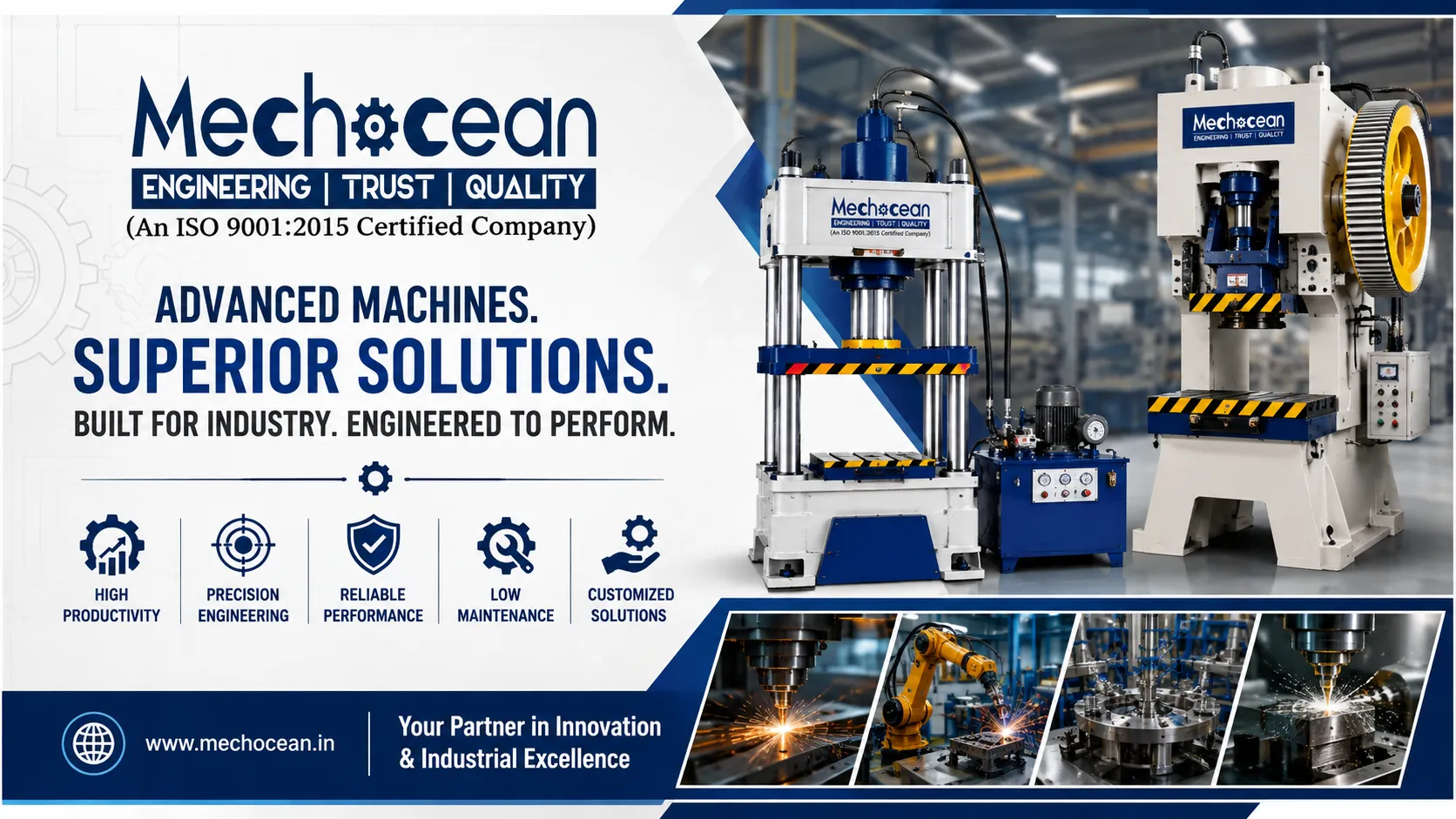
Mechocean Machines India Pvt. Ltd. is one of the trusted manufacturers of advanced Special Purpose Machines designed to improve industrial productivity through customized automation solutions. We specialize in developing application-specific SPMs for automotive, aerospace, railway, electrical, heavy engineering, and industrial manufacturing sectors.
Our engineering team works closely with every client to understand their production challenges and design machines that maximize efficiency while reducing production costs. Each machine is manufactured using premium-quality components, precision engineering, advanced PLC automation, and robust construction to ensure long-term reliability.
From concept development and machine design to manufacturing, installation, commissioning, operator training, and after-sales service, Mechocean Machines India Pvt. Ltd. provides complete turnkey solutions under one roof.
Conclusion
Understanding What is the work of an SPM machine? is essential for manufacturers planning to improve production efficiency through automation. The SPM full form in machine is Special Purpose Machine, and its primary objective is to perform dedicated manufacturing operations with maximum precision, speed, and consistency.
Whether it’s drilling, tapping, welding, pressing, assembly, leak testing, or inspection, special purpose machines help industries increase production, reduce labor costs, improve quality, and achieve long-term operational efficiency.
If your organization is looking for reliable, customized automation equipment, Mechocean Machines India Pvt. Ltd. offers advanced SPM solutions engineered to meet your exact production requirements while delivering exceptional performance and long-term value.
Frequently Asked Questions (FAQs)
1. What is the SPM machine full form?
The SPM machine full form is Special Purpose Machine, a customized machine designed for dedicated industrial manufacturing operations.
2. What is the work of an SPM machine?
An SPM machine automates specific manufacturing processes such as drilling, tapping, assembly, welding, inspection, leak testing, and machining with high accuracy and productivity.
3. Which industries use special purpose machines?
SPM machines are widely used in the automotive, aerospace, railway, electrical, medical equipment, heavy engineering, and consumer goods industries.
4. What are the advantages of an SPM machine?
SPM machines offer higher productivity, better accuracy, lower labor costs, reduced rejection rates, improved consistency, and faster production cycles.
5. Why choose Mechocean Machines India Pvt. Ltd.?
Mechocean Machines India Pvt. Ltd. designs and manufactures customized Special Purpose Machines with advanced automation, precision engineering, robust construction, and dependable after-sales support to help industries improve productivity and operational efficiency.