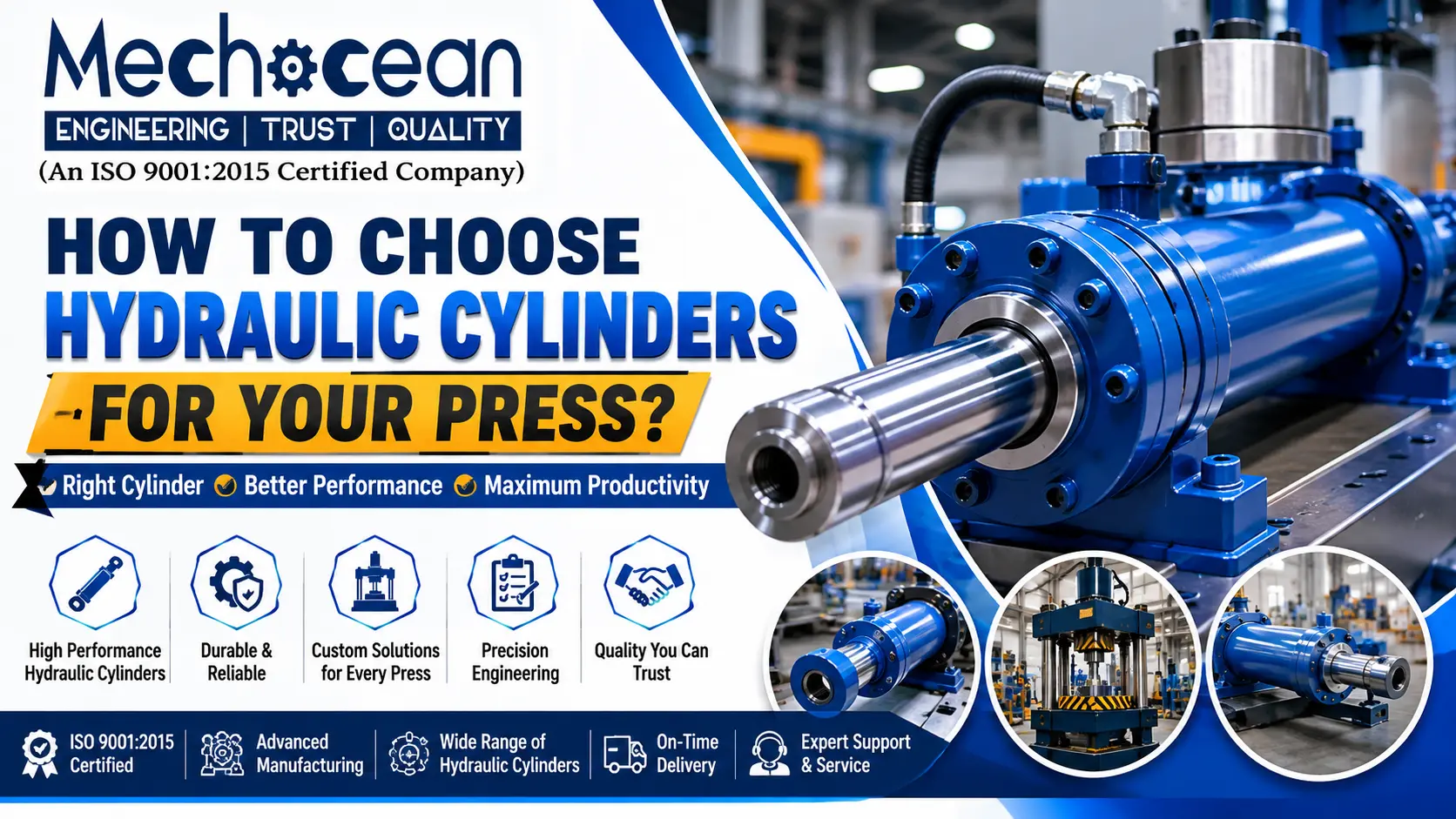
Hydraulic presses are common machines used in a number of industrial processes including manufacturing, metal shaping, automobile manufacture, forging, molding, and much more. The core part of any hydraulic press which helps generate the necessary force in order to perform the pressing action is the hydraulic cylinder. Selecting the right hydraulic cylinder for press applications is essential for achieving optimal performance, reliability, and efficiency.
Regardless of whether you are designing a new system of presses or enhancing an already existing one, opting for the right hydraulic press cylinders plays a vital role in ensuring that the process is productive, safe, and not costly to maintain. This article highlights important issues to consider when selecting hydraulic press cylinders.
Understanding the Role of a Hydraulic Cylinder in a Press
A hydraulic cylinder converts hydraulic pressure into linear force and motion. In a hydraulic press, the cylinder applies controlled force to compress, shape, bend, stamp, or form materials. The performance of a press cylinder directly affects the accuracy, speed, and force output of the machine. Therefore, selecting the proper cylinder is one of the most important decisions when building or maintaining a hydraulic press system.
Why Choosing the Right Hydraulic Cylinder Matters
Many industries focus on pumps, valves, and control systems while overlooking the importance of the cylinder itself. However, an improperly selected hydraulic cylinder for press operations can lead to:
- Reduced production efficiency
- Premature equipment wear
- Increased maintenance costs
- Inconsistent pressing force
- Safety concerns
- Higher energy consumption
A properly designed cylinder ensures smooth operation, long service life, and maximum productivity.
Also Read: Hydraulic Cylinders: Types, Configurations & Applications
Determine the Required Press Force
The first step in selecting a hydraulic cylinder is determining the amount of force required for your application.
Press force depends on:
- Material type
- Material thickness
- Production process
- Desired output quality
Hydraulic cylinders generate force based on hydraulic pressure and piston area. Larger piston diameters produce greater force at the same pressure level. For heavy-duty industrial presses, large-capacity hydraulic press cylinders are typically required to handle demanding workloads.
Consider Cylinder Bore Size
The bore size is one of the most critical specifications when choosing a hydraulic press cylinder. The bore refers to the internal diameter of the cylinder barrel. A larger bore creates a larger piston area, which increases force output.
When selecting the bore size, consider:
- Required pressing force
- Operating pressure
- Available hydraulic power
- Machine design limitations
Choosing the correct bore size helps achieve the desired performance without overloading the hydraulic system.
Evaluate the Stroke Length
Stroke length refers to the distance the piston travels during operation.
The ideal stroke length depends on:
- Press opening height
- Material dimensions
- Production requirements
- Tooling configuration
An excessively long stroke can increase cycle time, while a short stroke may limit operational flexibility. Selecting the proper stroke length ensures efficient movement and optimal machine performance.
Select the Right Type of Hydraulic Cylinder
Different types of hydraulic cylinders are available for press applications.
Single-Acting Cylinders
Single-acting cylinders use hydraulic pressure in one direction and rely on gravity or springs for return movement.
These cylinders are commonly used in:
- Small presses
- Lifting systems
- Basic pressing operations
Double-Acting Cylinders
Double-acting cylinders use hydraulic pressure for both extension and retraction.
They offer:
- Better control
- Faster cycle times
- Improved precision
- Higher productivity
Most modern industrial hydraulic press cylinders are double-acting due to their superior performance.
Check Operating Pressure Requirements
Every press cylinder is designed to operate within a specific pressure range.
Common industrial hydraulic systems operate between:
- 150 bar
- 210 bar
- 250 bar
- 350 bar and above
Selecting a cylinder rated for your operating pressure ensures safety and long-term durability. Always include a safety margin when calculating pressure requirements to prevent overloading.
Choose High-Quality Materials
Material selection significantly impacts cylinder lifespan and performance.
High-quality cylinders typically feature:
- Precision-machined steel barrels
- Hardened chrome-plated rods
- Heavy-duty seals
- Corrosion-resistant coatings
Industrial presses often operate under harsh conditions, making durable materials essential for reliable performance.
Consider Mounting Configuration
Proper mounting is critical for achieving smooth cylinder operation.
Common mounting options include:
- Flange Mounting- Provides excellent rigidity and is commonly used in hydraulic presses.
- Clevis Mounting- Allows slight movement and flexibility during operation.
- Trunnion Mounting- Suitable for applications requiring pivoting motion.
- The mounting arrangement should match the machine design and load direction.
- Focus on Seal Quality- Cylinder seals play a crucial role in maintaining hydraulic efficiency.
Poor-quality seals can cause:
- Fluid leakage
- Pressure loss
- Reduced force output
- Increased maintenance costs
Premium sealing systems help extend the lifespan of both the cylinder and the hydraulic system. When selecting a hydraulic cylinder for press, always choose cylinders equipped with high-performance sealing technology.
Consider Speed and Cycle Time
Press productivity often depends on operating speed.
Factors affecting cylinder speed include:
- Hydraulic flow rate
- Cylinder bore size
- Stroke length
- System pressure
For high-production environments, a well-designed hydraulic press cylinder should provide the ideal balance between force and speed. Faster cycle times improve production efficiency while maintaining consistent performance.
Evaluate Load Conditions
Understanding load characteristics is essential before selecting a cylinder.
Consider:
- Static loads
- Dynamic loads
- Shock loads
- Side loading conditions
Heavy side loads can reduce cylinder life and cause premature wear. Proper cylinder sizing and mounting help minimize these issues and improve operational reliability.
Importance of Maintenance and Serviceability
Industrial equipment requires regular maintenance to maintain peak performance.
Choose hydraulic press cylinders that offer:
- Easy seal replacement
- Accessible components
- Standardized spare parts
- Reliable technical support
Maintenance-friendly designs reduce downtime and lower long-term operating costs.
Applications of Hydraulic Press Cylinders
Hydraulic cylinders are used in a wide range of press applications, including:
- Metal stamping
- Sheet metal forming
- Forging presses
- Powder compaction
- Plastic molding
- Rubber processing
- Woodworking machinery
- Automotive manufacturing
Even a shop press cylinder used in workshops requires proper sizing and specification to ensure safe and efficient operation.
Common Mistakes to Avoid
When selecting a hydraulic cylinder for press, avoid these common mistakes:
- Choosing an undersized cylinder
- Ignoring pressure requirements
- Selecting improper stroke length
- Overlooking mounting design
- Using low-quality seals
- Failing to account for future production needs
Avoiding these errors can save significant repair and replacement costs.
Why Work with an Experienced Hydraulic Cylinder Manufacturer?
An experienced manufacturer can help determine:
- Correct cylinder dimensions
- Required force output
- Pressure ratings
- Material selection
- Seal configurations
- Custom design requirements
Professional guidance ensures you receive the most suitable press cylinder for your specific application.
Conclusion
Choosing the right hydraulic cylinder for press applications is essential for achieving reliable performance, high productivity, and long service life. Factors such as force requirements, bore size, stroke length, operating pressure, mounting configuration, and seal quality all play a vital role in selecting the ideal hydraulic press cylinder.
Whether you need industrial-grade hydraulic press cylinders for heavy manufacturing operations or a compact shop press cylinder for workshop applications, investing in the right cylinder will improve efficiency, reduce downtime, and maximize the performance of your hydraulic press system. By carefully evaluating your operational requirements and working with a trusted manufacturer, you can ensure long-term success and dependable press performance.