
In hydraulic and pneumatic systems, cylinders play a very important role in converting fluid power into mechanical motion. They are widely used in industries such as manufacturing, construction, automotive, material handling, and automation. One of the most common questions asked by engineers and buyers is: What is the difference between single-acting and double-acting cylinders?
Understanding the difference between single acting and double acting cylinder helps in selecting the right cylinder for the right application. In this blog, Mechocean Machines India Pvt. Ltd. explains the working principle, construction, advantages, disadvantages, and applications of single acting cylinder and double acting cylinder in a clear and simple way.
What is a Hydraulic or Pneumatic Cylinder?
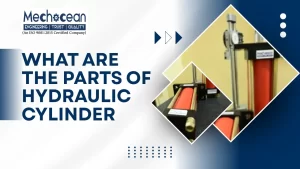
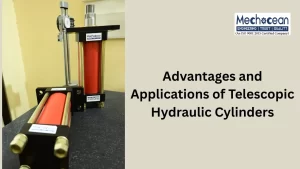
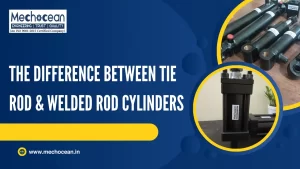
A cylinder is a mechanical actuator that produces linear motion using hydraulic oil or compressed air. It consists of a barrel, piston, piston rod, seals, and end caps. When fluid enters the cylinder, pressure is created, which moves the piston and generates force.
Based on how fluid pressure is used, cylinders are mainly classified into single-acting cylinders and double-acting cylinders.
What is a Single-Acting Cylinder?
A single-acting cylinder is a type of cylinder in which fluid pressure is applied only on one side of the piston. This pressure moves the piston in one direction only. The return motion of the piston is achieved by an external force such as a spring, gravity, or load weight.
In a single-acting cylinder, there is only one fluid port. When pressurized fluid enters the cylinder, the piston extends. When the pressure is released, the piston returns to its original position automatically.
Working Principle of a Single-Acting Cylinder
The working of a single-acting cylinder is very simple. Pressurized fluid enters through a single inlet port and pushes the piston forward. This creates linear motion and force. Once the fluid pressure is removed, the piston returns back due to the spring or external force.
Because pressure is used only in one direction, the force generated during extension is higher than during return. This basic working principle makes single-acting cylinders suitable for light-duty applications.
Advantages of Single-Acting Cylinders
Single-acting cylinders are simple in design and easy to operate. They require less fluid and fewer control components, which reduces system cost. These cylinders are compact, lightweight, and easy to maintain. Due to their simple construction, they are also more economical compared to double-acting cylinders.
Limitations of Single-Acting Cylinders
The main limitation is that force is applied only in one direction. The return stroke depends on external force, which may not always be reliable. Stroke length is also limited due to the internal spring mechanism. Single-acting cylinders are not suitable for applications requiring controlled movement in both directions.
What is a Double-Acting Cylinder?
A double-acting cylinder is a cylinder in which fluid pressure is applied on both sides of the piston. This means the piston can move forward and backward using fluid power. A double-acting cylinder has two ports—one for extension and one for retraction.
Because pressure is applied in both directions, the cylinder provides better control, higher efficiency, and consistent force throughout the stroke.
Working Principle of a Double-Acting Cylinder
In a double-acting cylinder, pressurized fluid enters one port to push the piston forward. For the return stroke, fluid is supplied to the opposite port, which pushes the piston back. The movement is fully controlled by fluid pressure, without the need for springs or gravity.
This working principle makes double-acting cylinders ideal for heavy-duty and precision applications.
Advantages of Double-Acting Cylinders
Double-acting cylinders provide force and control in both directions. They allow longer strokes and smoother operation. These cylinders are more versatile and can be used in complex industrial systems. Since both extension and retraction are powered, productivity and accuracy are higher.
Limitations of Double-Acting Cylinders
The main drawback is higher cost. Double-acting cylinders require more components such as control valves, piping, and fluid. The system design is more complex, and maintenance requirements are slightly higher compared to single-acting cylinders.
Difference Between Single Acting and Double Acting Cylinder
The difference between single acting and double acting cylinders can be clearly understood by comparing their working, design, and applications. A single-acting cylinder uses fluid pressure for movement in one direction only, while a double-acting cylinder uses pressure in both directions.
Single-acting cylinders have one fluid port, whereas double-acting cylinders have two ports. In terms of control, single-acting cylinders offer limited control, while double-acting cylinders provide precise and smooth motion control. Cost-wise, single-acting cylinders are more affordable, but double-acting cylinders offer better performance for demanding applications.
Single Acting Cylinder and Double Acting Cylinder: Application Comparison
Single-acting cylinders are commonly used in applications such as lifting devices, clamping systems, pressing operations, and simple automation tasks where return motion does not need power. They are also used in hydraulic jacks and tipping mechanisms.
On the other hand, double-acting cylinders are used in machine tools, industrial presses, injection molding machines, construction equipment, conveyor systems, and robotics. Wherever controlled motion and force are required in both directions, double-acting cylinders are preferred.
How to Choose Between Single-Acting and Double-Acting Cylinders?
To decide what is the difference between single-acting and double-acting cylinders from a selection point of view, you should consider your application needs. If your system requires force in only one direction and cost is a concern, a single-acting cylinder is suitable. However, if you need precise control, higher efficiency, and powered motion in both directions, a double-acting cylinder is the better choice.
Factors such as load, stroke length, speed, working environment, and budget should always be evaluated before final selection.
Why Choose Mechocean Machines India Pvt. Ltd.?
Mechocean Machines India Pvt. Ltd. is a trusted manufacturer and supplier of high-quality hydraulic and pneumatic cylinders. We offer both single acting cylinder and double acting cylinder solutions designed for durability, performance, and reliability. Our engineering expertise ensures that clients get the right product based on their specific application requirements.
Conclusion
Understanding what is the difference between single-acting and double-acting cylinders is essential for choosing the right industrial solution. The difference between single acting and double acting cylinder lies in their working principle, control, cost, and application suitability. While single-acting cylinders are simple and cost-effective, double-acting cylinders offer superior control and versatility.
By selecting the correct cylinder type, industries can improve efficiency, reduce downtime, and enhance overall system performance. For expert guidance and quality solutions, Mechocean Machines remains a reliable partner in industrial motion systems.