Assembly Line Manufacturers
Mechocean Machines India Pvt. Ltd. is one of the trusted Assembly Line Manufacturers offering high-quality, reliable, and customized solutions for various industries. We specialize in designing and developing modern systems that improve productivity and reduce manual work. Our focus is on delivering smart and efficient assembly line automation solutions that help businesses grow faster.
Assembly Line Manufacturers in India
As one of India’s leading assembly line manufacturers, we understand the evolving needs of various industries. From small-scale production units to large-scale manufacturing plants, we provide solutions that cater to every requirement. Our assembly lines are designed with absolute precision and advanced technology to ensure uninterrupted operations. Whether you require a simple system or a fully automated setup, we provide comprehensive support—from design through to installation.
Assembly Line Manufacturing Companies
The primary focus of assembly line manufacturing companies is to streamline the production process. These companies design systems that:
- Increase production speed
- Reduce manual errors
- Make the workflow automated and efficient
- Ensure consistent product quality
Mechocean’s assembly line solutions are developed using modern technology, enabling industries to achieve maximum output with minimum downtime.
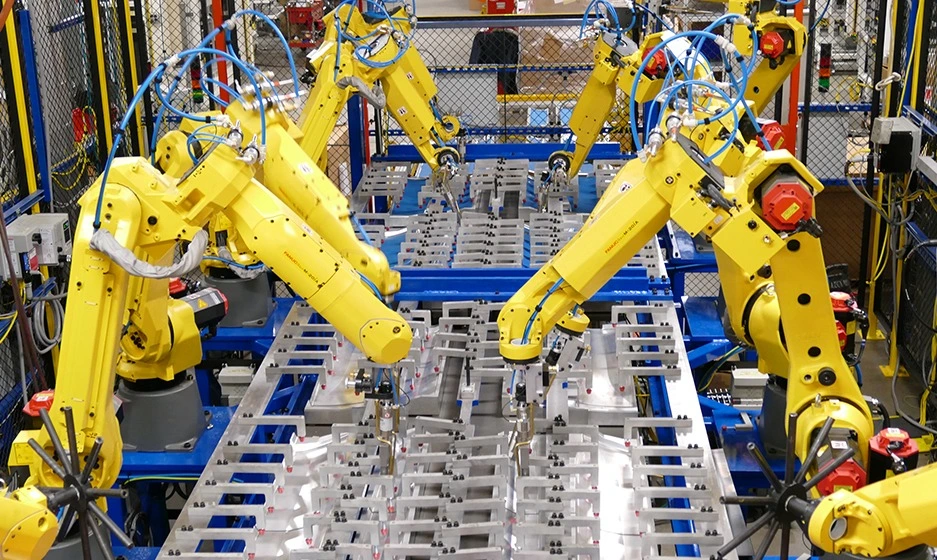
Automotive Assembly Line Suppliers
We are also recognized as reliable Automotive Assembly Line Manufacturers. The automotive industry requires high precision and speed, and our systems are built to meet these exact requirements. Our automotive assembly lines are ideal for:
- Vehicle part assembly
- Component handling
- Painting and finishing lines
- Inspection and testing processes
We ensure that every system delivers accurate results and improves overall production efficiency.
Assembly Line Production in India
Assembly line production in India helps factories produce goods faster and more efficiently. Products go through different stages, and each worker performs a specific task. This system saves time, reduces costs, and improves quality. Many industries, such as automobiles and electronics, use assembly lines to increase production and meet market demands. Our solutions are designed to support modern production needs by offering:
- High-speed operations
- Consistent performance
- Easy integration with existing systems
- Energy-efficient designs
Types of Assembly Line
We design and manufacture a wide range of assembly lines for different industries. Our systems are flexible, durable, and easy to operate.
1. Automated Assembly Lines- Fully automated systems that handle production with minimal human intervention.
2. Semi-Automatic Assembly Lines- A combination of manual and automatic processes for better control and cost efficiency.
3. Conveyor-Based Assembly Lines- Efficient systems that use conveyors to move products from one stage to another.
4. Custom Assembly Line Solutions- We design assembly lines based on your specific production needs and space requirements.
Benefits of Choosing Our Assembly Line Systems
1. Increased Productivity- Our automated systems help in faster production and higher output.
2. Improved Quality- Automation reduces human errors and ensures consistent product quality.
3. Cost Effective- Reduced labor costs and better efficiency make our systems a smart investment.
4. Custom Design- We provide tailored solutions based on your industry and requirements.
5. Easy Maintenance- Our assembly lines are designed for smooth operation and low maintenance.
Technical Specifications
| Category | Key Specification |
|---|---|
| Line Configuration | Straight / U-shaped / Circular layout with modular workstation system |
| Conveyor System | Belt / Roller / Chain conveyor, adjustable speed, load capacity as per product requirement |
| Workstations | 5–50+ stations, each for specific task, ergonomic and operator-friendly design |
| Power & Control | 220V / 415V, 50Hz supply with PLC / manual / semi-automatic control system |
| Production Capacity | 500 to 10,000+ units per day depending on automation level |
| Frame Structure | Heavy-duty MS powder-coated / SS structure for durability |
| Automation Features | Sensors, PLC system, optional IoT monitoring and auto rejection system |
Frequently Asked Questions (FAQ)
An assembly line in manufacturing is a system where a product moves through different workstations, and each station performs a specific task to complete the product. This assembly line system helps speed up production, improve efficiency, and ensure consistent quality in manufacturing lines.
Many assembly line companies and production line suppliers design and manufacture these machines. They create customized assembly line systems for industries like automotive, electronics, and packaging. These companies provide complete setups — including conveyors, feeders, and robotic arms — to make production faster and more efficient.
A classic example of a manufacturing assembly line is the Ford Model T car production. Ford Motor Company introduced this innovative method, allowing vehicles to be produced in just a few minutes instead of hours. Today, manufacturing lines are used in almost every industry for mass production.
Many assembly line products are made in industries such as automobiles, home appliances, electronics, food processing, and packaging. Examples include cars, mobile phones, refrigerators, and packaged food items. The assembly line system ensures these products are made quickly, accurately, and at a lower cost.
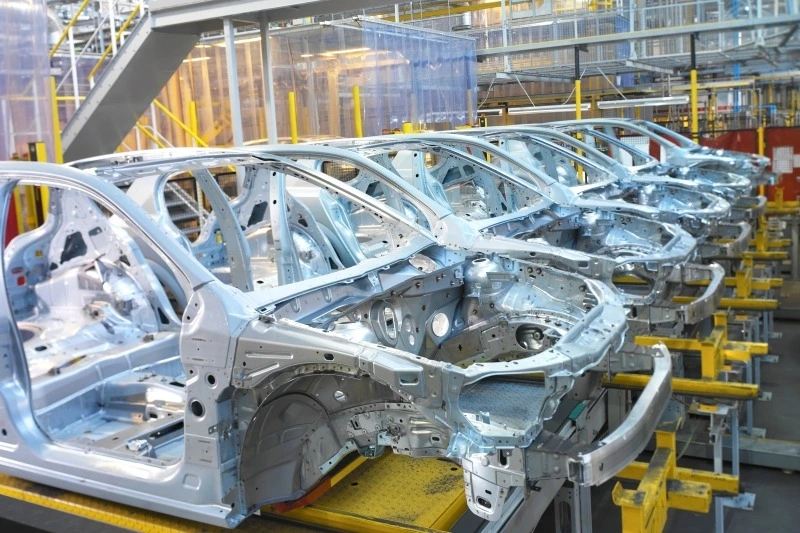
Automotive Component Assembly line
Process Equipment Assembly Lines
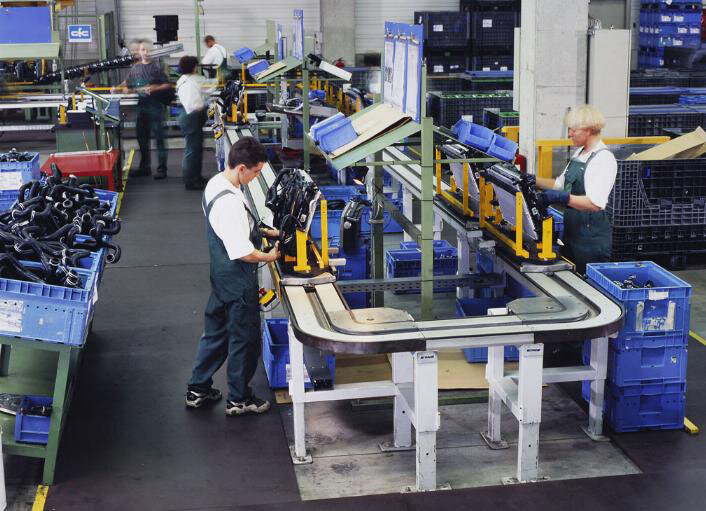
Customized Assembly Lines