
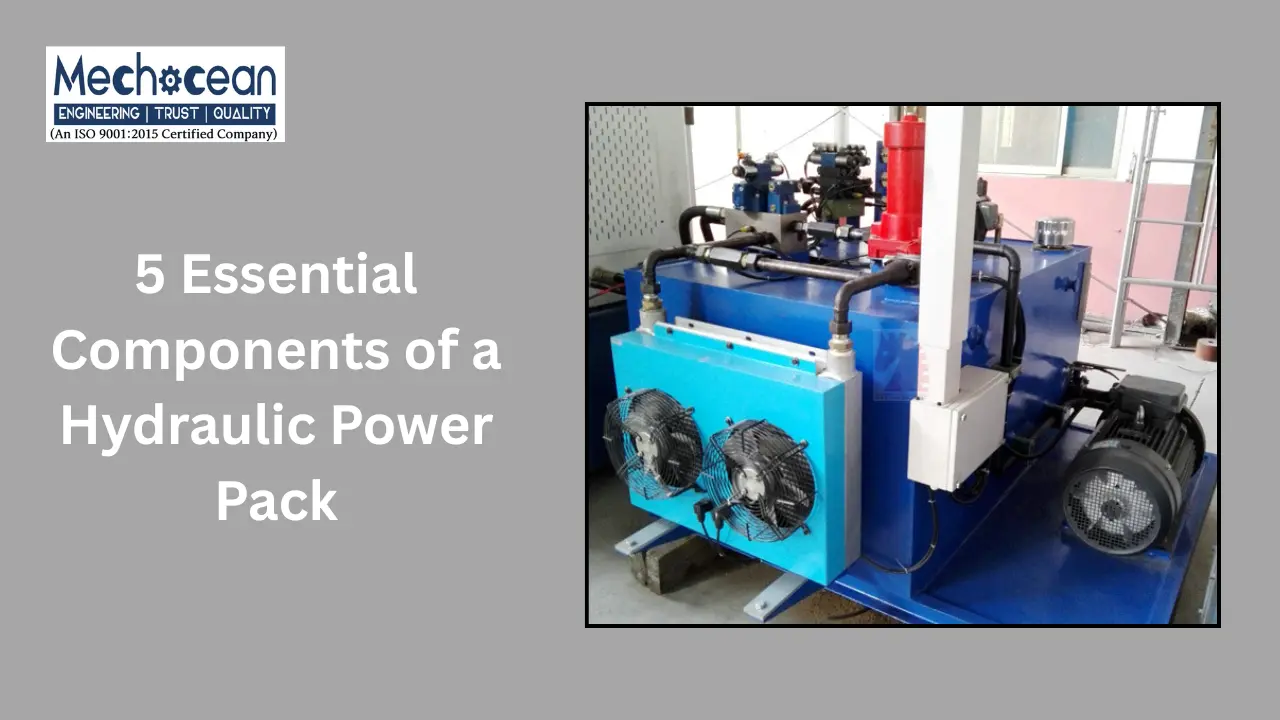
Hydraulic systems play a vital role in modern industrial operations, offering reliable power transmission for lifting, pressing, clamping, rotating, and moving heavy loads. At the heart of these systems lies the hydraulic power pack, a compact and efficient unit that generates, controls, and transmits hydraulic energy. Understanding the core structure of a power pack is essential for selecting the right system and ensuring long-term performance.
In this blog, we will explore what are hydraulic power packs, their working principle, and the 5 essential components of a hydraulic power pack, along with insights into quality parts and recent technological advancements.
What Are Hydraulic Power Packs?
A power pack hydraulic system is a self-contained unit that supplies hydraulic energy to machines and equipment. It consists of several integrated components such as a motor, pump, reservoir, valves, and filters that work together to generate controlled hydraulic pressure.
Hydraulic power packs are widely used in industries such as manufacturing, construction, steel plants, material handling, marine, automotive, and automation systems. Their compact hydraulic-power pack design allows them to deliver high power output while occupying minimal space.
Understanding Hydraulic Power Pack Components
To fully understand how a hydraulic system works, it is important to study the hydraulic-power pack components and their functions. Each component has a specific role in ensuring smooth operation, pressure control, and system reliability.
Below is a detailed explanation of the 5 major components that form the backbone of any hydraulic-power pack.
5 Major Components of a Hydraulic-Power Pack
Hydraulic Reservoir- The hydraulic reservoir is one of the most important hydraulic-power pack components. It stores the hydraulic oil required for system operation and helps in heat dissipation, air separation, and contamination settling.
The reservoir is designed to maintain proper oil level and temperature while allowing impurities to settle at the bottom. A well-designed reservoir improves oil life and overall system efficiency. In an optimized hydraulic-power pack design, the reservoir size is selected based on flow rate, operating temperature, and system duty cycle.
Hydraulic Pump- The hydraulic pump is the heart of the power pack hydraulic system. It converts mechanical energy from the motor into hydraulic energy by moving fluid under pressure. The pump determines the flow rate and pressure capability of the system.
Common pump types used in hydraulic-power packs include gear pumps, vane pumps, and piston pumps. The selection depends on pressure requirements, efficiency, noise level, and application. High-quality pumps ensure consistent performance and reduced wear of other hydraulic power pack components.
Electric Motor- The electric motor provides the mechanical power required to drive the hydraulic pump. It plays a vital role in determining the overall energy efficiency and reliability of the hydraulic system.
Motors are selected based on power rating, voltage, speed, and duty cycle. In modern hydraulic power pack design, energy-efficient motors are preferred to reduce power consumption and operating costs. Proper motor selection also ensures smooth startup and stable pressure generation.
Control Valves- Control valves regulate the flow, direction, and pressure of hydraulic fluid within the system. They ensure precise movement and safe operation of hydraulic actuators such as cylinders and motors.
Valves commonly used in a hydraulic power pack parts list include directional control valves, pressure relief valves, flow control valves, and check valves. These components provide accurate control, protect the system from overload, and enhance operational safety.
Filters and Accessories- Filters and accessories are essential for maintaining oil cleanliness and system longevity. Contaminants in hydraulic oil can cause severe damage to pumps, valves, and actuators if not properly filtered.
Filters remove dirt, metal particles, and moisture from the oil, ensuring smooth operation of all hydraulic power pack components. Accessories such as pressure gauges, oil level indicators, breathers, and temperature sensors further improve monitoring and maintenance efficiency.
Hydraulic Power Pack Parts List Explained
A standard hydraulic power pack parts list typically includes the hydraulic reservoir, pump, electric motor, control valves, filters, hoses, fittings, pressure gauges, and electrical control panels. Each part must be carefully selected to match system pressure, flow rate, and operating conditions.
Using a detailed hydraulic power pack diagram helps visualize how these components are connected and how hydraulic fluid flows through the system. A well-planned layout ensures easy maintenance and improved system performance.
Role of Hydraulic Power Pack Diagram in System Design
A hydraulic power pack diagram provides a clear representation of component arrangement and fluid flow paths. It helps engineers understand system functionality, troubleshoot issues, and optimize performance.
During the design phase, diagrams are essential for selecting correct valve configurations, pump placement, and safety elements. An efficient diagram supports a reliable and compact hydraulic power pack design.
The Importance of Quality Parts
The performance and lifespan of a hydraulic power pack largely depend on the quality of its components. Inferior parts can lead to oil leakage, pressure loss, overheating, and frequent breakdowns.
Using high-grade materials and precision-engineered parts ensures consistent output, reduced maintenance, and long-term reliability. For industrial applications, investing in quality hydraulic power pack components results in lower operational costs and improved system safety.
Advances in Hydraulic Power Pack Technology
Modern hydraulic power pack technology has evolved significantly with advancements in automation, energy efficiency, and smart control systems. Variable frequency drives (VFDs), sensor-based monitoring, and compact modular designs are becoming increasingly popular.
Advanced power pack hydraulic systems now offer reduced noise levels, improved energy savings, and better control accuracy. Integration with PLC systems and IoT-based monitoring allows real-time performance tracking and predictive maintenance, further enhancing system efficiency.
Applications of Hydraulic Power Packs
Hydraulic power packs are widely used in industrial presses, injection molding machines, lifting platforms, material handling equipment, marine systems, construction machinery, and automation lines. Their flexibility and compact design make them suitable for both heavy-duty and precision applications.
Conclusion
Understanding the 5 essential components of a hydraulic power pack is crucial for selecting the right system and ensuring reliable operation. From the hydraulic reservoir and pump to control valves and filters, each component plays a vital role in overall system performance.
Mechocean Machines India Pvt. Ltd. focus on delivering robust and efficient hydraulic solutions with carefully engineered hydraulic power pack design and high-quality components. With continuous advancements in technology, modern hydraulic power packs are becoming more efficient, compact, and intelligent, making them indispensable for today’s industrial needs.